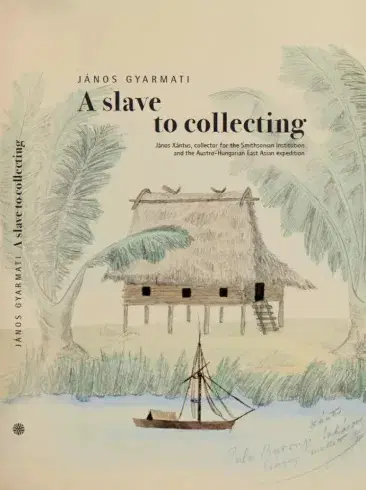
A slave to collecting - János Gyarmati
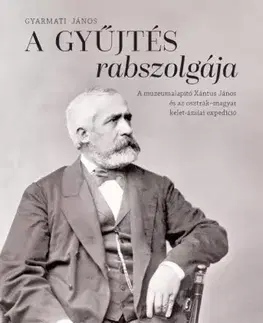
A century and a half ago, prominent developments took place in the field of Hungarian museum affairs. Partly on home soil, partly far from the country. At that time, Ferenc Pulszky was appointed head of the Hungárián National Museum. During the 1869-1872 parliamentary term, he was not only an influential personality within the ruling party and a member of parliament, but also the speaker of the finance committee of the House of Representatives. Partly as museum director, partly due to his political weight, he worked hand in hand with his childhood friend, the Minister of Religion and Education József Eötvös, to bring the National Museum under the supervision of the Hungarian Parliament, both legally and financially. In the budget debate about this, Eötvös (1976a: 93) gave a speech in which he basically set a new direction fór the future operations of the National Museum. During the following years, Pulszky created a modern museum structure divided into departments which nőt only determined the internál structure of the National Museum, but also the nature of other museums developing from its departments. In parallel, events that significantly impacted Hungárián museums were taking place in distant parts of the world, in Ceylon [Sri Lanka], China, Japan and Southeast Asia. At that time, the frigate Donau of the navy of the Austro-Hungarian Monarchy sailed around the world so that the delegation it was earrying could conclude diplomatic and trade agreements with three East Asian and four South American countries on behalf of Emperor and King, Franz Joseph. Collecting scientific objects and knowledge was integral to such trips for centuries. Until that time, however, Hungary had not had an opportunity to participate insuch expeditions alone due to its political position. This situation changed thanks to the dualistic political system created in 1867 as a result of the Austro-Hungarian Compromise, i.e. the establishment of the Austro-Hungarian Empire. It was then that the Mathematics and Natural Sciences Department of the Hungárián Academy of Sciences and the president of the academy, József Eötvös, seized the first opportunity that presented itself. As minister of religion and education, i.e. culture of the first Hungarian government after the Compromise, he arranged for Hungarian scientists to participate in and possibly collect during the expedition. Eötvös not only won the right for Hungarian scientific participation in the face of the government in Vienna. His role was also outstanding because, aside from the traditional focus on natural history, he initiated collection of “ethnological” objects and Information as part of the agenda. Although the acquisition scope of the Hungárián National Museum, founded in 1802, was basically limited to Hungary, the natural Sciences already began to stretch this framework by the 1830s due to their universal nature.1 Thus, even though only occasionally, cultural goods from outside Europe came into the museum’s collections, mainly as gifts. They primarily consisted of coins, bút alsó, from time to time, included Egyptian antiquities. The dividing line between the acceptance of such assemblages was basically determined by whether the ereators of the objeets in question were classified as “natural” or “cultural” peoples or from past civilizations, and whether the objeets were offered as gifts or as items for purchase. Following such antecedents, József Eötvös’ instructions to János Xántus were delivered in November 1868. According to him, Xántus should “increase the natural history, ethnographic and bibliographic collections of the Hungarian National Museum, the Hungarian Academy of Sciences, and the Royal Hungarian University of Science”.2 This was a clear sign of the change in the way cultural policy leaders envisioned the future of Hungarian public collections following the Compromise. In this request addressed to Xántus, a government off icer for the f irst time issued instructions to co
Podobné produkty